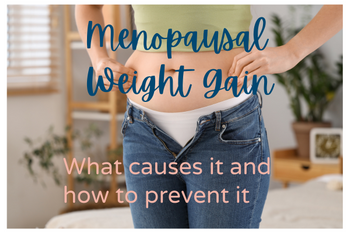
What's the deal with weight gain during the menopausal transition? Is it aging in general, or menopause and hormones specifically? While more research is needed, here's what we do know.
What causes it
Increased fat and decreased muscle. The SWAN study (Study of Women's Health Across the Nation) showed that during the menopausal transition — from about 2 years before the final period to 4 years after — fat mass increases and lean (muscle) mass decreases. Weight climbs throughout the transition and then stabilizes in postmenopause. This isn't driven by age alone; it's directly related to the drop in estrogen around menopause.
Average weight gain. Most women gain about a pound per year during the transition. However, up to 20% of women gain 10 pounds or more.
"Meno belly." This is the term for fat that accumulates around the midsection. Estrogen tends to direct fat storage toward the hips and thighs, while androgens (male-type hormones) direct it toward the middle. As estrogen falls, women tend to start storing fat around the midsection — which is also associated with higher cardiovascular risk, especially when waist circumference exceeds 35 inches.
Less fidgeting. One study showed that women in the transition don't necessarily eat more, but their spontaneous activity (not exercise — think fidgeting and everyday movement) dropped sharply as estrogen fell, leading to increased weight and body fat.
Can it be prevented?
The good news is yes — there are things that help:
- Preventative lifestyle changes. One study showed that women who started a reduced-calorie diet and moderate exercise program during perimenopause successfully prevented weight gain through the transition.
- Increase protein intake. You don't need to eat keto (which is often unsustainable and cuts out healthy foods like fruit), but adequate protein prevents muscle loss and supports better body composition. Aim for about 0.8–1 g of protein per kg of body weight. (Divide your weight in pounds by 2.2 to get kilograms — that's roughly your daily protein target in grams.)
- Add resistance training. Most of us know we need cardio, but strength training 2–3 days a week is just as important. It preserves the muscle mass that menopause tends to erode, and it raises metabolism so you burn more calories all day — even while sleeping.
- Consider MHT. Menopausal hormone therapy doesn't cause weight loss, but it may help limit fat accumulation around the midsection. The effect is small and shouldn't be the main reason to start hormones — but if you're otherwise a good candidate, it's worth discussing with your doctor.
What if I'm already overweight before menopause?
Women who are already overweight or obese before the transition may have a harder time preventing gain — and losing weight and keeping it off. Obesity is a chronic medical condition and is treated as one. The good news: there are very effective medications for obesity that can be used at any time, including during the menopausal transition.
(Anti-obesity medications are generally for women with a BMI over 30, or over 27 with a weight-related medical condition, who have already tried diet and exercise without lasting success.)
If you're struggling with weight during this stage, talk to your doctor about whether these options might be right for you.